A squash draw is the bracket structure that determines who plays whom, in what order, and on which courts during a tournament. The main draw formats are single elimination (lose once, you're out), double elimination (two losses to exit), round-robin (everyone plays everyone), and group stages into knockouts. Creating a fair draw involves seeding players by rating, placing byes correctly for non-power-of-2 entry numbers, and scheduling matches with adequate rest between rounds.
The draw is the backbone of your tournament. Get it right, and matches flow smoothly with fair matchups. Get it wrong, and you'll have top players meeting in round one, byes in strange places, and a schedule that falls apart by lunch.
This guide covers how to create draws that work — from choosing the right format to handling awkward entry numbers.
Draw Formats
Single Elimination
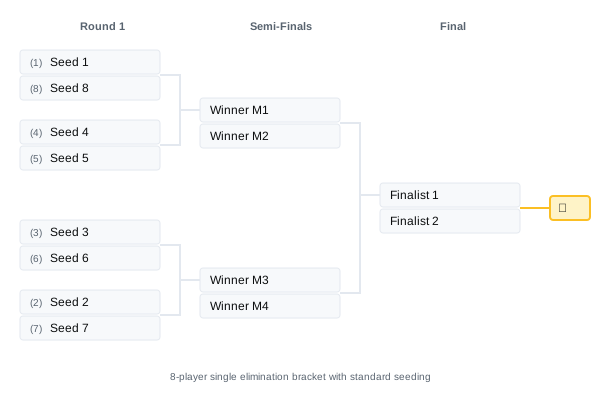
The classic knockout. Lose once, you're out.
Round 1        Quarters       Semis         Final
Player 1 ──┐
           ├── Winner ──┐
Player 8 ──┘            │
                        ├── Winner ──┐
Player 4 ──┐            │            │
           ├── Winner ──┘            │
Player 5 ──┘                         ├── Champion
                                     │
Player 3 ──┐                         │
           ├── Winner ──┐            │
Player 6 ──┘            │            │
                        ├── Winner ──┘
Player 2 ──┐            │
           ├── Winner ──┘
Player 7 ──┘
Best for: Any size field, limited time, clear winner needed Downside: Players may travel for one match and go home
Double Elimination
Lose twice before you're out. Losers drop to a consolation bracket; winner of consolation can still reach the final.
Best for: Giving everyone more matches, smaller fields (8-16) Downside: Complex to schedule, finals can be confusing
Round-Robin
Everyone plays everyone in their group. Final standings based on match wins.
Best for: Small fields (4-8 players), leagues, where ranking everyone matters Downside: Slow; 8 players = 28 matches
Group Stages + Knockout
Round-robin groups, then top players advance to elimination bracket.
Group A (4 players) → Top 2 advance
Group B (4 players) → Top 2 advance
                           ↓
                    Elimination Semis/Final
Best for: 12-32 players, balancing match volume with knockout drama Downside: Needs time for both phases
Seeding
Seeding prevents your best players meeting early. It rewards higher-rated players with easier early draws.
Standard Seeding Positions
For a 16-player draw, place seeds in these positions:
| Position | Seed |
|---|---|
| 1 | Seed 1 |
| 16 | Seed 2 |
| 8 | Seed 3 |
| 9 | Seed 4 |
| 4 | Seed 5 |
| 13 | Seed 6 |
| 5 | Seed 7 |
| 12 | Seed 8 |
This ensures:
- Seed 1 and 2 can only meet in the final
- Seed 1, 2, 3, 4 can only meet in semis
- Top seeds face lower seeds in round one
How Many to Seed?
Rule of thumb: seed the top 25-50% of the draw.
| Draw size | Seeds |
|---|---|
| 8 | 2-4 |
| 16 | 4-8 |
| 32 | 8-16 |
What to Base Seeding On
In order of reliability:
- ELO or platform ratings — most accurate
- Previous tournament results — if recent
- National rankings — if available
- Organiser knowledge — last resort, prone to bias
If you have no data, at least separate known top players so they don't meet early.
Handling Awkward Numbers
Brackets work cleanly with 4, 8, 16, 32 entries. Real life gives you 11, 19, or 27.
Byes
A bye means a player advances to the next round without playing. Use byes when you have fewer entries than bracket slots.
12 entries in a 16-draw:
- 4 byes needed
- Give byes to top 4 seeds
- They enter in round 2; everyone else plays round 1
Bye placement rules:
- Byes go to highest seeds
- Spread byes across the draw (not all in one half)
- A player with a bye should face someone who played in round 1
Converting to Groups
If byes feel awkward (e.g., 6 entries in an 8-draw = 2 byes), consider switching format:
- 6 players → round-robin (everyone plays everyone)
- 5 players → round-robin
- 7 players → groups of 3+4, winners play final
Scheduling
Time Per Match
| Format | Typical Duration |
|---|---|
| Best-of-3 to 11 (PAR) | 25-35 min |
| Best-of-5 to 11 (PAR) | 40-55 min |
| Best-of-3 to 15 | 30-40 min |
Add 5-10 minutes buffer between matches for changeover.
Slot Calculation
For a 16-player elimination draw:
- Round 1: 8 matches
- Quarters: 4 matches
- Semis: 2 matches
- Final: 1 match
- Total: 15 matches
With 2 courts and 45-minute slots:
- 8 slots per court per day (6 hours of play)
- 16 slots total
- Fits in one day with slight buffer
Scheduling Tips
- Schedule early rounds across all courts — parallel play
- Consolidate later rounds — semis and finals on one court for spectators
- Don't back-to-back the same player — allow rest between matches
- Publish times in advance — players need to plan travel and warm-up
- Build slack for delays — matches run long
Creating the Draw: Manual vs Software
Manual (Spreadsheet)
Works for small events. You'll need to:
- Calculate bracket positions
- Place seeds correctly
- Handle byes manually
- Manually schedule times
- Update results by hand
Time-consuming and error-prone at scale.
Software
Tournament platforms generate draws automatically. Enter players, set seeds, click generate. The bracket populates correctly, byes are placed, and scheduling follows.
If you're running more than 2-3 events per year, software saves significant time.
Common Mistakes
Not seeding Random draws create unfair first rounds. Always seed if you have any rating data.
Too many byes in one half Byes should be distributed. If all byes are in the top half, the bottom half plays more rounds.
Back-to-back matches Don't schedule a player for consecutive time slots. They need rest.
No buffer time Matches run long. A 45-minute slot for a 40-minute average match leaves no room for delays.
Publishing draws too late Players need 24-48 hours notice. Last-minute draws mean last-minute no-shows.
Checklist
Before publishing your draw:
- Correct number of players in bracket
- Seeds placed in correct positions
- Byes distributed evenly and given to top seeds
- No player scheduled back-to-back
- Buffer time between slots
- All matches have court assignments
- Draw published 24-48 hours before event
Frequently Asked Questions
What is the best format for a squash tournament draw?
Single elimination is the simplest and fastest — it works for any size field. Round-robin is better for small groups of 4-8 players where everyone should get multiple matches. For 12-32 players, group stages into knockouts gives the best balance: round-robin groups ensure several matches per player, then elimination brackets create knockout drama.
How do byes work in a squash draw?
Byes are used when the number of entries doesn't fill a bracket cleanly (brackets need 4, 8, 16, or 32 players). A bye means a player advances to the next round without playing. Byes should go to the highest seeds and be spread evenly across the draw. For example, 12 entries in a 16-draw means 4 byes, given to the top 4 seeds.
How many players should I seed in a squash tournament?
Seed the top 25-50% of the draw. For an 8-player draw, seed 2-4 players. For 16 players, seed 4-8. For 32 players, seed 8-16. Base seeding on ELO ratings, recent tournament results, or national rankings — in that order of reliability.
How do I schedule matches for a squash tournament?
Allow 45-60 minutes per match slot for best-of-5 to 11 (PAR scoring), or 25-35 minutes for best-of-3 to 11. Add 5-10 minutes buffer between matches. Schedule early rounds across all courts in parallel, then consolidate to fewer courts for semi-finals and finals. Never schedule the same player in back-to-back slots.
Should I create draws manually or use software?
For small events (under 8 players), manual draws in a spreadsheet work. For regular tournaments or fields over 16 players, software saves significant time and reduces errors. Tournament platforms auto-generate seeded brackets, place byes correctly, and schedule matches across courts.
Next Steps
Creating draws manually is fine for small events. For regular tournaments or larger fields, a platform that auto-generates seeded brackets saves hours.
PlayMetric creates draws in seconds — seeded by ELO rating, scheduled across your courts, and published to players instantly.
Related Reading
- How to Run a Squash Tournament
- Box League Format Explained
- How ELO Ratings Work in Squash
- Best Squash Tournament Software in 2026
Questions about draw formats? Email playmetric.co@gmail.com